
Radio path
How a mobile session travels through Chile
A video call does not “use 5G” as a single object. It borrows a radio sector, a backhaul circuit, a core network, and often a cache that already sits in the country. This note walks that path in order.
-
01
Handset modem
The phone selects a cell, a band, and a generation the operator has enabled there.
-
02
Sector and site
Your traffic shares airtime with neighbors on the same antennas and the same baseband.
-
03
Backhaul
A fiber or microwave link carries the site toward an aggregation ring.
-
04
Core and peering
Authentication, policy, and the handoff to domestic or international routes.
-
05
Content
A nearby cache can make a test look fast even when the radio is only ordinary.
The phone is a radio first
Before an app opens a socket, the modem camps on a cell. It listens for broadcast information: which operator identity is on that site, which frequencies are available, and whether 4G, 5G non-standalone, or a standalone 5G core is offered. The handset then requests resources. If the cell is busy, those resources are shared. A strong signal with a crowded sector can still feel slow.
In Chile the first useful question is rarely “4G or 5G?” It is “which band, how wide, and how many people are in this sector right now?” A coverage-oriented band can hold a call across a valley and still offer modest capacity. A mid-band 5G carrier can look excellent on a speed test at midnight and ordinary at lunch.
The site is a neighborhood switch
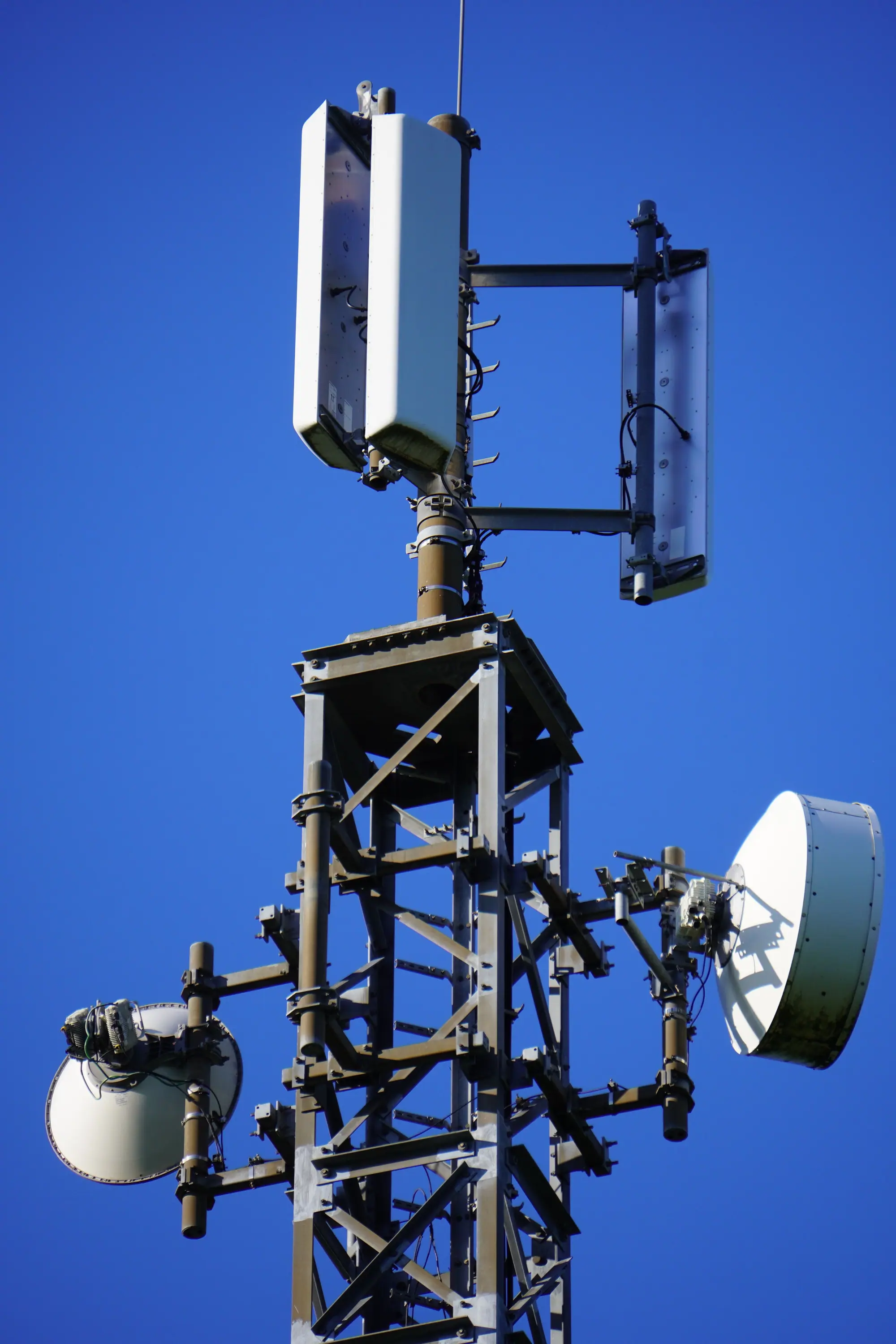
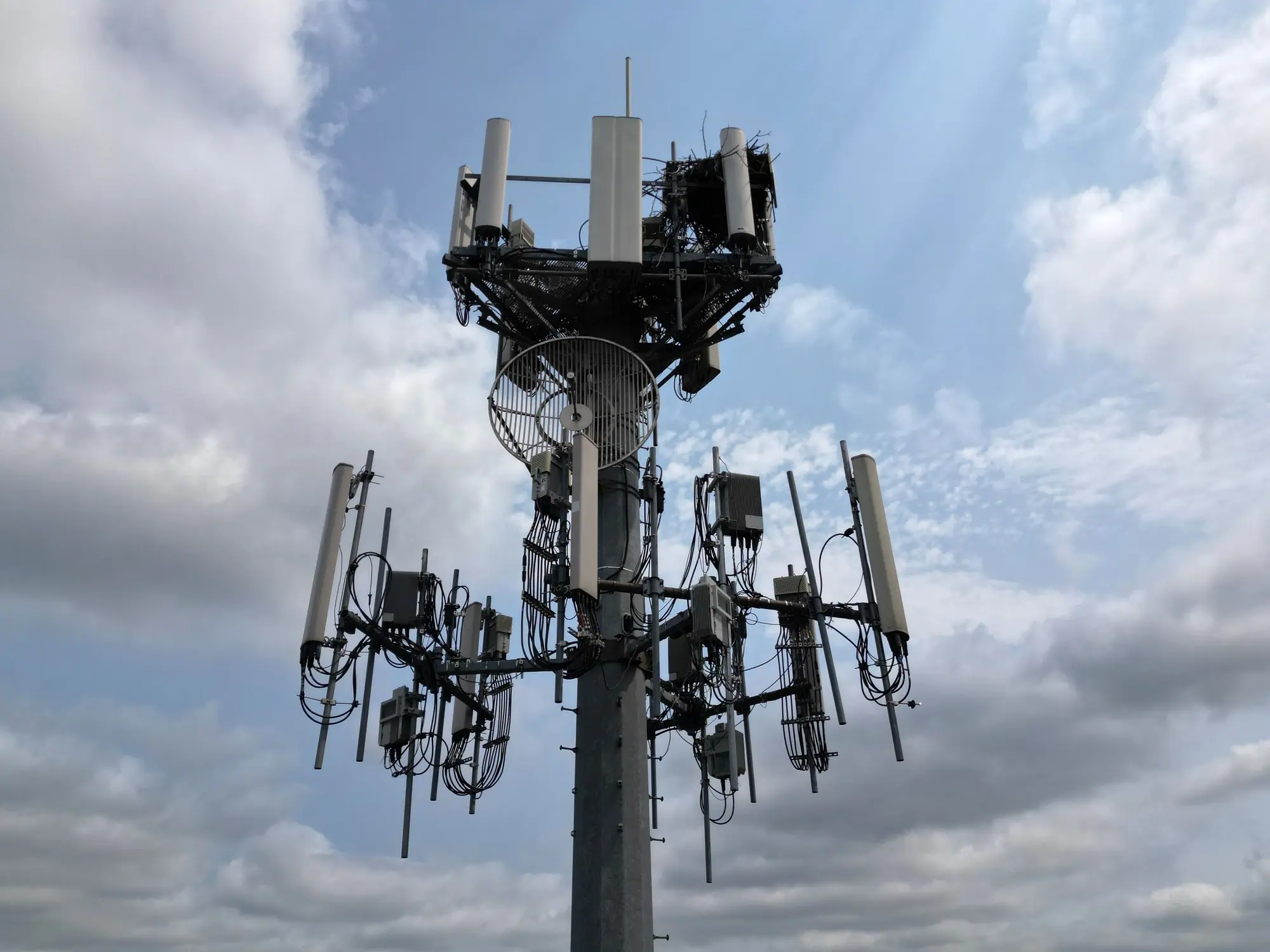
A typical macro site has several sectors. Each sector has radios, filters, and a connection into a baseband unit. From the street you see panels and a tower or rooftop frame. Inside, there is also power, grounding, and a router that must send every bit onward. If you want the physical reading, continue with cell sites and radio infrastructure.
Backhaul is the silent ceiling
Once the radio has your packet, the site still has to leave town. Along Chile’s central corridor that exit is often fiber. In thinner geographies it may be a microwave hop, or a chain of hops. A wide 5G carrier fed by a narrow microwave link will advertise a generation and deliver a backhaul. See fiber backhaul and the cell.
The core decides who you are
The operator core authenticates the SIM, applies the subscription policy, and connects you to an IP network. From there, traffic to a Chilean news site may stay domestic. Traffic to a server on another continent still has to reach a cable landing. That last fact is why an international page can feel heavier than a local one even when the bars look full. The companion note is submarine cables and Chile’s capacity.
A practical check
When a session misbehaves, change only one variable: move a few dozen meters, wait for the cell to change, or test a domestic page and an overseas page separately. If the domestic page is fine and the overseas page is not, the radio may be innocent. If both collapse when you enter a lift, the air interface is the suspect. For the numbers behind the bars, use reading signal metrics.
What “camping” on a cell actually means
Camping is the quiet state before you send much data. The modem has chosen a serving cell, decoded its identity, and is ready to request resources. A phone can camp on a coverage layer and only later add a capacity layer when you open a heavy page. That is why a lock-screen badge and a mid-download badge can disagree.
If the serving cell changes while you walk a single block, you are in an overlap zone. That is normal in a dense commune. If it changes every few seconds while you stand still, the phone may be hunting between a nearby weak sector and a distant stronger one. Moving a few meters is more informative than restarting the phone.
Handover is a planned change, not a failure
As you travel, the network and the modem negotiate a new serving cell. A brief stall can appear as a frozen video or a dropped socket. That stall is not proof that “the network is down.” It is proof that the radio neighborhood changed. In a long desert hop the next cell may be far; in Santiago it may be the next rooftop.
VoLTE and data are not the same queue
A voice session often rides a dedicated bearer with different scheduling. A speed test can look modest while a call stays clear, or the reverse. Do not diagnose a call from a download number, or a download from a call icon.
A walk-through you can repeat
- Stand outdoors and note whether the badge is 4G, 5G, or mixed, and whether you are on Wi-Fi (turn it off for this check).
- Open a domestic page you know is hosted or cached in Chile, then an overseas page that is unlikely to be cached.
- Walk indoors to a rear room and repeat both pages without changing apps.
- If only the overseas page suffers, the radio may be fine. If both collapse, start with the air interface and the counters.
- If counters stay healthy and both pages stay slow, read backhaul and subscription policy as the next suspects.
What this note will not tell you
It will not name a “better” company. It will not publish unofficial cell IDs as a directory. It will not claim that a generation badge equals a contract speed. Those omissions are deliberate: they keep the page useful after a software update and honest as an advertising destination.
Idle, connected, and why a badge flickers
A modem spends much of the day idle-but-camped. When you open a socket it requests resources, then may release them again. A badge that flips between 4G and 5G during that dance is often the phone adding or dropping a capacity layer, not a network that is “unstable” in the conversational sense.
If the flip happens while you stand still and counters swing wildly, look for a sector edge or a building shadow. If the flip happens only when a download starts, you may be seeing carrier aggregation come online. Neither case is a ranking of companies. Both are reasons to write down the band, not only the icon.
Wi-Fi calling is a different path
If the handset has moved the session onto a household or shop access point, you have left the mobile radio for that moment. Diagnose mobile issues with Wi-Fi off. Diagnose the access point separately. Mixing the two produces a story that belongs to neither mobile backhaul nor the home router.
What “the core” is allowed to mean here
The core is the operator’s system for identity, policy, and the hand-off to IP. This note does not map those machines or name vendors. It only insists that a packet which has already survived the air still has work to do. Subscription shaping, if it exists on a given line, lives there — not in the panel you can see from the sidewalk.
A notebook line that stays honest
“Outdoor, Wi-Fi off, domestic page usable, overseas page heavy, counters ordinary.” That sentence already points at the ocean or a cache. “Indoor, both pages dead, counters collapsed.” That sentence points at the air. The atlas is built so those two sentences do not get the same article.