
Transport
The cell is only as wide as the cable leaving it
Backhaul is the unglamorous link from a radio site to the operator’s aggregation network. Users never see it on a phone badge. It still sets the ceiling after the air interface has done its work.
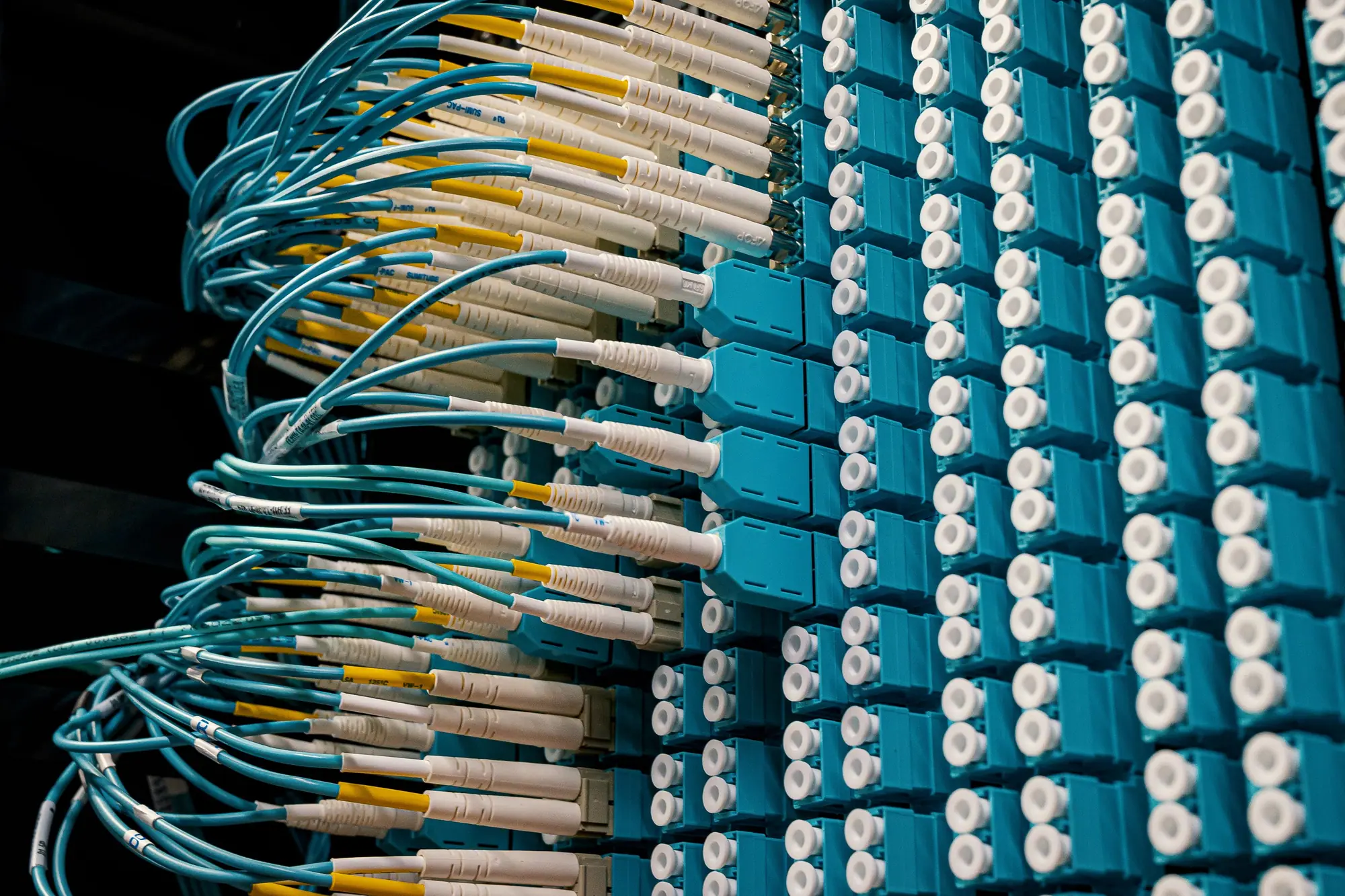
Fiber on the spine
Chile’s inhabited strip is long and relatively narrow. National fiber follows roads and energy corridors, especially along Route 5 and into metropolitan rings. Where a macro site can meet that spine, additional radio width is easier to justify. Mid-band 5G without a fat exit is mostly a sticker.
Microwave on the ribs
Transverse valleys, mining spurs, and island-like towns often keep a microwave hop — or a chain of them. Microwave is not “old.” It is a practical way to cross ground you cannot trench this year. It does have weather, licensing, and capacity limits. Rain in the south and long desert hops in the north are different microwave problems.
A 100 MHz radio channel cannot outrun a 50 Mbps tail, no matter which generation logo the handset prints.
What to look for in the field
Dish antennas on a tower, pointing to another ridge, are a visible clue that the site may not be on fiber. A cluster of panels with no dishes may still be on fiber that arrived underground. Neither clue is perfect. The practical test is still comparative: a local page versus a large download, at a quiet hour versus a busy one. If the radio metrics stay healthy while throughput stays flat, suspect transport or policy. Continue with site anatomy and the session path.
Aggregation rings and why a town shares a fate
Several sites often meet at an aggregation node before they reach a larger city ring. If that node is thin, a whole valley can look “slow 5G” at once. That pattern is a clue: the problem is not your particular handset.
Microwave in the north and the south
Northern hops can be long and dry. Southern hops can be shorter and wetter. Fade margins, licensed channels, and the number of hops in series all cap throughput. A dish on a ridge is a hint, not a diagnosis. Fiber can still arrive later in the same cabinet.
How to suspect transport without opening a cabinet
- Confirm radio counters are not in a collapse. If RSRP and SINR look ordinary, keep going.
- Test a small domestic page and a large download. If the page is fine and the download plateaus, transport or policy is in play.
- Repeat at a quiet hour. If the plateau disappears, you may have been seeing load on a shared tail.
- Compare a plaza with a point several kilometers out. A sudden cliff with healthy radio often means you left the fat exit.
Do not climb or open infrastructure. The test is comparative, from the street. Continue with what a site looks like.
Fiber is not a moral upgrade
A fibered site can still be a busy site. Microwave can still carry a quiet village well. The useful question is whether the exit matches the radio width the operator lit on that hill. A mid-band 5G carrier on a thin tail will advertise a generation and deliver a tail. That mismatch is a planning choice, not a reason to invent a national slogan.
What a dark fiber trench does not promise
A roadside cabinet or a warning tape is not proof that the nearest macro is lit on that pair. Terrestrial plant serves many jobs: fixed access, operator rings, energy, and public networks. From the sidewalk you can notice the plant. You cannot inventory it. Do not open it.
Shared tails and shared fates
If a whole valley slows at once while counters on your phone stay ordinary, several sites may be sharing one aggregation. That pattern points away from your particular handset. It still does not name a company as “worse.” It names a hop. Pair it with the geography note if the valley is the story.
Power and the tail
A radio that stays up on batteries can still lose its microwave far end if that hop’s power died first. The badge then describes whatever distant cell still answers. That is an energy order, not a spectrum event. See site power.